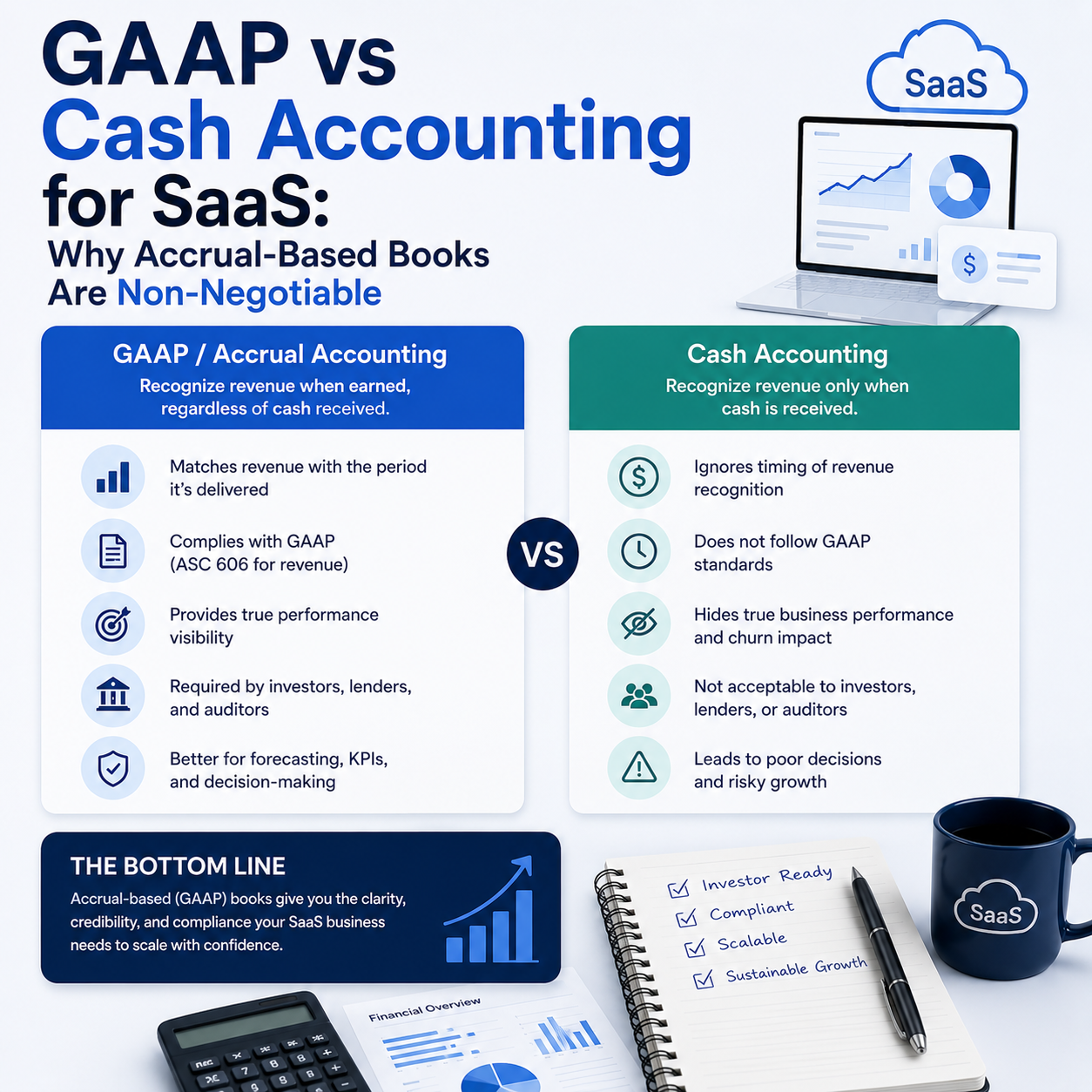

Most early-stage founders start with cash-basis accounting because it's simple: money in, money out.
But the moment you start selling annual subscriptions, raising outside capital, or preparing for due diligence, cash-basis books become a liability.Investors expect GAAP-compliant, accrual-based financials. Your accountant knows this.
The question is: does your bookkeeper?
The Difference Between Cash and Accrual AccountingCash-basis accounting: Revenue is recorded when cash is received.
Expenses are recorded when cash is paid. Simple, intuitive, and completely wrong for SaaS.Accrual-basis accounting: Revenue is recorded when it's earned (regardless of payment timing). Expenses are recorded when they're incurred. This is what GAAP requires.Example: A customer pays you $24,000 on January 1st for a two-year subscription.Under cash basis: $24,000 in revenue recognized in January. January looks incredible, February through December look flat.Under accrual: $1,000 recognized each month for 24 months. This is the accurate picture of how your business is performing.
Why Cash Accounting Destroys Your Credibility with InvestorsWhen a VC or angel investor receives your financials, the first thing their finance team checks is the accounting method. Cash-basis books signal:
You don't have a SaaS-aware bookkeeper.Your revenue numbers can't be trusted at face value.Deferred revenue isn't being tracked — which means committed future revenue is invisible.Your MRR/ARR figures don't reconcile to your income statement.
This alone can stall a funding process for weeks while your accounting is rebuilt — or end it entirely if the investor isn't willing to wait.What GAAP-Compliant Books Look Like for SaaSMonthly revenue recognized ratably across subscription periods — not lump-sum on payment date.Deferred revenue balance on the balance sheet reflecting committed, unearned subscription income.Prepaid expenses (like annual software licenses) amortized monthly, not expensed upfront.
Accrued liabilities for expenses incurred but not yet invoiced.Revenue reconciliation between your billing platform and your accounting software.When to Make the SwitchIdeally, before your first investor conversation. Realistically, the moment you start selling annual contracts or plan to raise external capital.
The earlier you switch, the less painful the restatement. Switching from cash to accrual after 3 years of growth requires significant historical cleanup — sometimes months of accounting work. Switching in Month 6 with $20K in revenue is a weekend project.
If you're already on cash basis and approaching a fundraise, a SaaS-specialist bookkeeper can restate your books to accrual basis and ensure your financials tell an accurate, investor-ready story.