
Running out of cash is the number-one killer of early-stage SaaS startups — not bad products, not competition, not market timing. Cash.
Burn rate and runway are the two numbers that tell you exactly how much time you have and how fast the clock is ticking. Every SaaS founder should be able to recite these figures from memory — and every SaaS bookkeeper should be updating them monthly.
This guide covers the formulas, the common mistakes, and how to build a cash management system that gives you enough warning to act before it's too late.
Gross Burn Rate vs Net Burn RateGross burn rate is the total cash your company spends each month — all operating expenses including payroll, software, office, and any other costs. It's the raw outflow before any revenue.
Formula: Gross Burn = Total monthly cash expensesNet burn rate is the difference between your cash outflows and cash inflows (revenue collected). This is the number that actually matters for runway.
Formula: Net Burn = Gross Burn — Cash Revenue CollectedInvestors ask for net burn because it reflects how efficiently your revenue offsets your spending.
A company spending $200K/month but collecting $150K in cash has a net burn of just $50K — very different from a company burning $200K with no revenue at all.
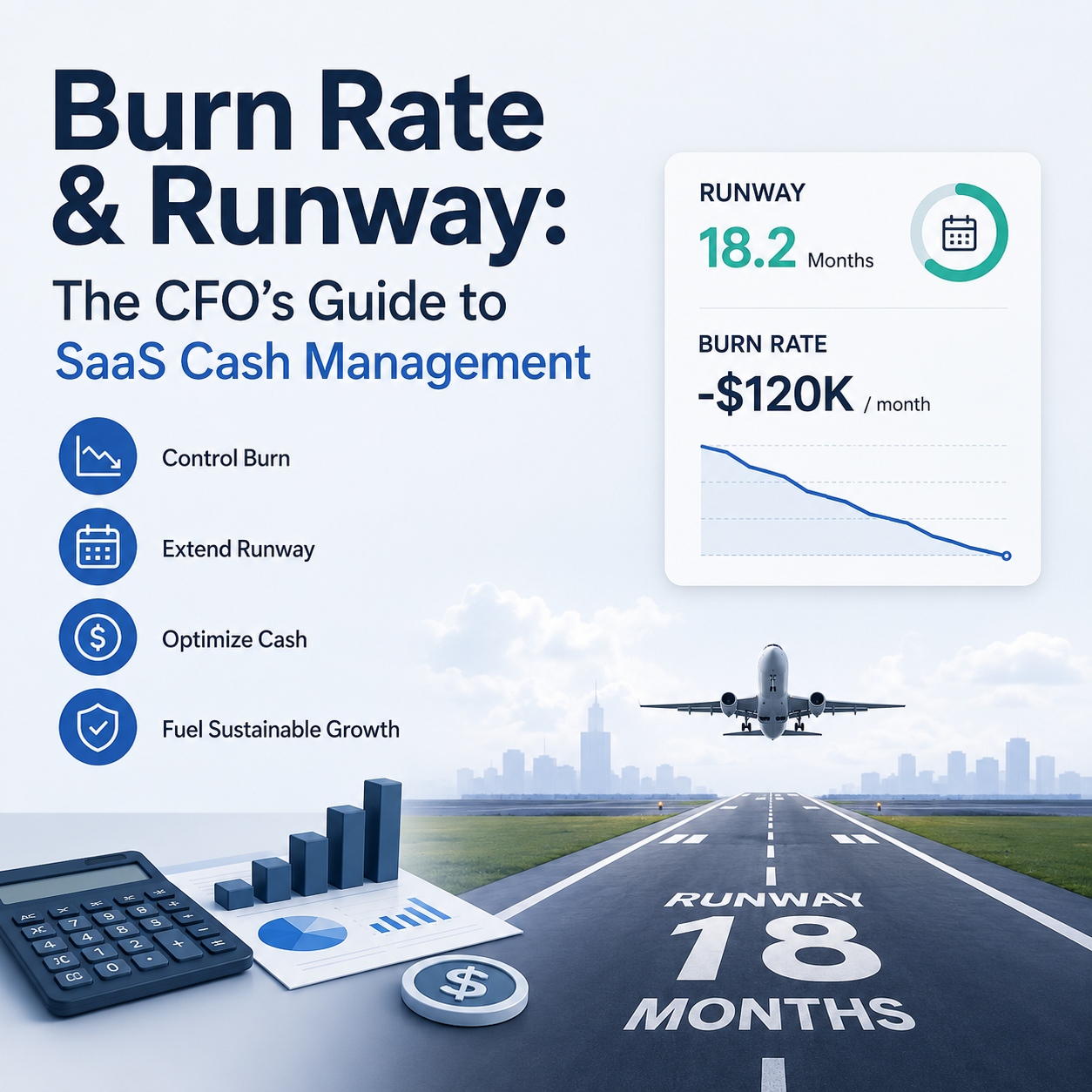
How to Calculate RunwayRunway is simply how many months of operating cash you have remaining at your current net burn rate.Formula: Runway (months) = Cash Balance / Net Monthly Burn RateExample: $1.2M in the bank, $100K net burn per month = 12 months of runway.
The general rule of thumb: you want at least 18 months of runway after closing a funding round. Anything under 6 months is a crisis. Under 3 months and you're in survival mode, not growth mode.
Why Static Runway Models LieA straight-line runway calculation assumes your burn rate stays constant. It won't.
Headcount changes, one-time expenses, seasonal revenue dips, or a single large customer churning can change your trajectory dramatically within a quarter.Build a dynamic runway model that scenarios out:
Base case: Current burn rate continues, revenue grows at your historical rate.Conservative case: Revenue growth slows 30%, one mid-tier customer churns.Stress case: Revenue is flat for 3 months, you hire 2 new engineers.Your bookkeeper should update actuals monthly so you can compare plan vs reality and adjust before a scenario becomes a crisis.Cash Management Best Practices for SaaS FoundersSeparate operating and reserve accounts: Keep 3+ months of expenses in a separate, untouched cash reserve. Mercury and Brex both support this easily.Align billing to cash flow: Annual prepay contracts dramatically extend runway by pulling forward cash.
Incentivize annual plans.Monitor weekly, review monthly: Your bookkeeper should provide a weekly cash position summary. Monthly closes should reconcile actuals against your runway model.
Know your fundraising lead time: Raising a Seed or Series A takes 3–6 months minimum. Start the process at 12+ months of runway, not 6.What Your Books Should Show Every Month
A properly maintained set of SaaS books will give you a real-time cash flow statement, a bank reconciliation confirming your true cash position, an updated expense categorization for accurate gross burn calculation, and a revenue reconciliation so your net burn reflects actual collected cash — not just invoiced amounts.
When your books are clean and current, calculating runway takes five minutes. When they're messy or months behind, you're flying blind.